

On Using AI to Write About AI
To my friend (you know who you are), and to anyone else reading this:
I need to be transparent about something before you continue: I used AI to help write this letter. Not because I couldn’t write it myself, but because AI has become one of my primary tools for thinking clearly and expressing ideas effectively. If that immediately invalidates this entire piece in your mind, I understand. But I hope you’ll keep reading, because how I used AI—and how I didn’t—is central to the argument I’m making.
I’ve been using AI since the early days of the ChatGPT boom. I wasn’t the earliest adopter, but I was slightly ahead of the mass popularity curve. I saw the potential immediately—not as a replacement for thinking, but as a tool for learning and executing mundane tasks more efficiently. Over the past few years, I’ve watched the AI race unfold as competing companies continue improving their models and leapfrogging each other in capability. I’ve used multiple LLMs and enjoy picking favorites for specific tasks, though they continue to trade places at the top.
AI has been my assistant, my fitness trainer, my nurse, my physical therapist, my programmer, and most of all, my mental sparring partner.
But here’s what AI doesn’t do for me, what it can’t do: it can’t form a connection with me. It can’t care about me, or you, or our friendship. I’ve used AI for health guidance, but never health directives. I’ve used it for reflection, but never fully formed therapy. I don’t use it to think for me—I use it to help me think clearly and faster.
Since AI can’t form connections, it also can’t understand them. It can’t understand what this conversation means to me or why I’m taking the time to write this.
For this article specifically, AI served three functions: as a mental sparring partner to test and refine my arguments, as a research assistant to find historical examples I could learn more about and select from, and as a word and phrase finder when I knew what I wanted to say but couldn’t quite articulate it. The ideas came from the same place all ideas come from—other people’s ideas that I’ve thought about, adopted, and adapted on my own.
The spark for this letter came from our recent conversation about AI and art. We’ve been friends for about seven years now, and I know how deeply you care about your creative work. I respect that. I also know you tie a significant portion of your self-worth to your artistic abilities, and I understand why the rise of AI feels threatening to that identity. This letter isn’t meant to diminish those feelings or to tell you you’re wrong for having them. It’s meant to offer a different perspective—one that I believe will serve you better in the long run.
I’m also posting this publicly on my website, where I share thoughts on photography, design, art, productivity, and creative self-improvement. So, while this letter is written to you specifically, I’m keeping your name anonymous and writing it in a way that might resonate with others who share your concerns.
I work in instructional design, and I’m a creative myself. I understand the value of craft, the satisfaction of mastery, and the fear that comes when a tool emerges that seems to shortcut the path you’ve walked. But I’ve also seen enough technological shifts to recognize the pattern: the people who engage with new tools early, critically, and thoughtfully are the ones who shape how those tools get used. The people who resist out of fear are the ones who get left behind.
This letter represents some of my best writing in over a year. I haven’t done any genuine writing in about twelve months, and the process of crafting this argument reignited something I’d been missing. AI didn’t do that for me—your challenge to my worldview did. The tool just helped me express what I already felt with more clarity and precision.
So yes, I used AI to write this. And I think the result is better because of it. Not because AI is more valuable than me, but because it allowed me to focus my energy on the parts that matter most: the ideas, the structure, the conviction behind the words, and most importantly, my care for you and our friendship.
If you can accept that, then keep reading. If you can’t, I understand—but I think you’ll be missing out on an argument that might genuinely change how you see this moment we’re living through.
With respect and friendship,
Aaron
Dear friend,
I’ve been thinking about our conversations on AI, and I wanted to share some thoughts with you. Not to dismiss your concerns, but because I think they come from a place I genuinely understand: a love for the craft, a respect for skill earned through hard work, and a fear that something valuable might be lost.
Let me start by acknowledging what’s real in your worry. AI is disrupting creative fields. Contest categories are being created for AI art. Tools are emerging that can generate images, text, and music in seconds. It feels like the ground is shifting, and when you’ve spent years mastering your craft, that’s legitimately unsettling.
But I want to offer you a different way to look at this moment.
The Three Responses to Inevitable Change
Throughout history, every major technological shift has revealed three types of people. Please examine them all and determine which best describes you:
The Resistors: They tie their identity and self-worth to the methods of the past. They see new tools as threats rather than instruments. When photography emerged in the 1840s, painters denounced it as mechanical fakery that would destroy “true art.” The French poet Baudelier called it “art’s most mortal enemy.” But painting didn’t die—it evolved. Freed from the need to simply reproduce reality, painters gave us Impressionism, Cubism, and Abstract Expressionism. Photography didn’t replace painting. It liberated painting to explore what only painting could do.
The Waiters: They keep their heads down, assuming they can join later when things stabilize. But here’s what’s critical about AI specifically: the entry level isn’t rising linearly—it’s rising exponentially. When typewriters became standard in offices, someone who waited a few years could still learn to type and catch up. But with AI, people who wait will find that others haven’t just learned the tool—they’ve developed entirely new creative processes, built portfolios of hybrid work, and established themselves in emerging fields. The gap between “I’ll wait and see” and “I’m fluent in this new paradigm” grows wider every month, not every decade.
The Curious: They accept that change is coming and approach it with open minds. They don’t romanticize the past, even while respecting it. They understand that humans are, at our core, tool builders—and that there’s always a lag between building a tool and mastering its use. The tool improves, yes, but so does our sophistication in using it.
The Historical Pattern: Tools Transform, They Don’t Replace
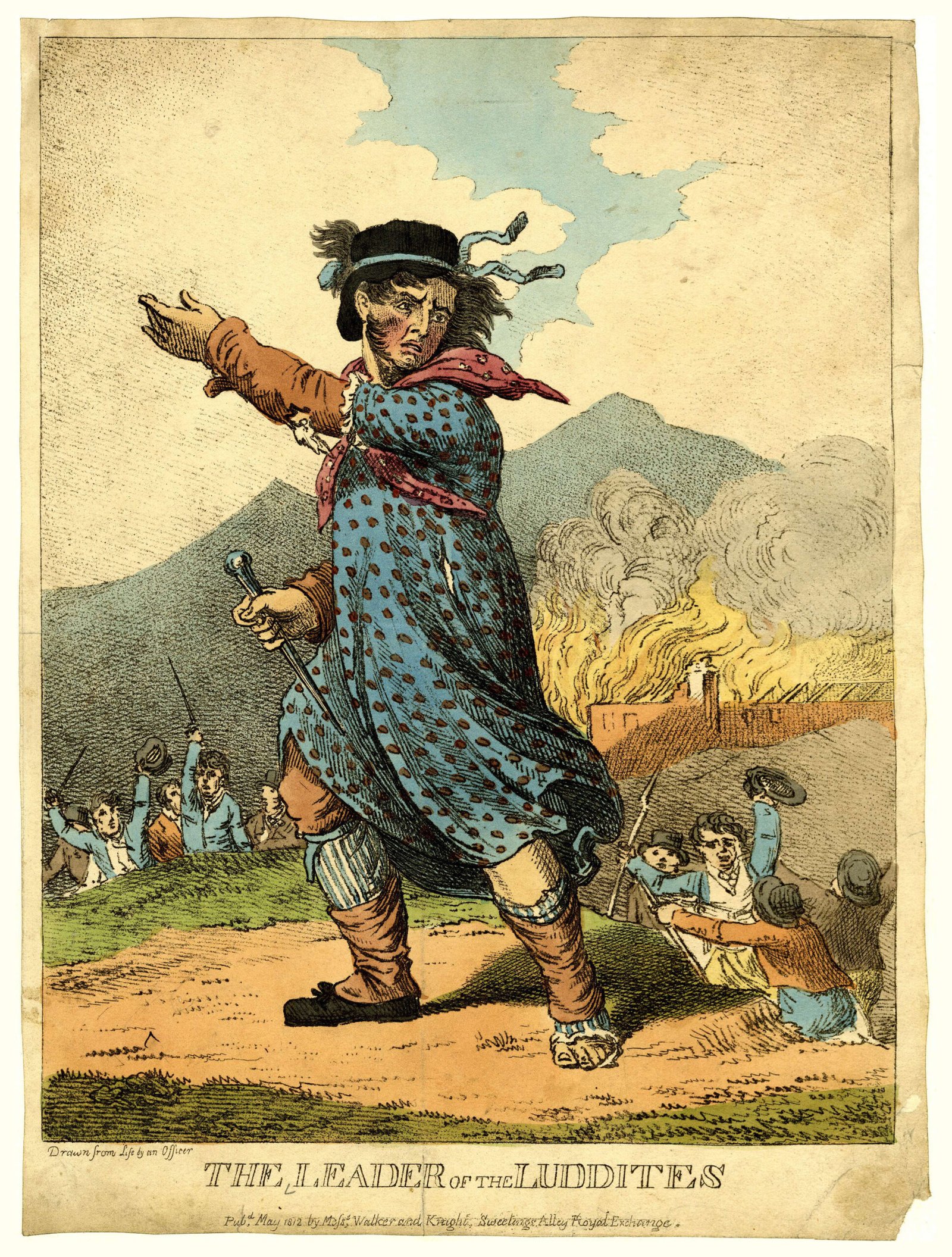
Consider the Luddites of 1811—skilled textile artisans who smashed mechanical looms because they feared becoming obsolete. And they were right to be afraid: many did lose their livelihoods in the short term. But what happened in the longer view? The textile industry exploded. Yes, it required fewer people to produce basic cloth, but it created vast new categories of work: fashion design, textile engineering, pattern making, quality control, industrial design. The nature of creative work in textiles changed, but human creativity didn’t become less valuable—it became differently valuable.
When the printing press emerged in the 1450s, scribes who had spent lifetimes perfecting manuscript illumination faced a genuine crisis. Some resisted and never adapted. But the printing press didn’t end human creativity with text—it democratized it. More books meant more readers meant more writers. The explosion of printed material created unprecedented demand for editors, illustrators, typesetters, publishers, and entirely new forms of literature that would have been economically impossible in the manuscript era.
Electric guitars in the 1950s faced fierce resistance from jazz purists who insisted they weren’t “real” instruments. Now we can barely imagine modern music without them. Digital audio workstations in the 1990s faced similar skepticism from studio engineers who had mastered analog mixing boards. Today, those DAWs haven’t replaced musicians—they’ve enabled bedroom producers to create professional-quality music and spawned entirely new genres.
What AI Actually Does (And Doesn’t Do)
Here’s what I think is the fundamental misunderstanding about AI: it doesn’t replace thinking—it augments iteration. It doesn’t replace artistry—it changes what artistry means in practice.
Consider this question: what’s more important, the text written, or the ideas it conveys? Is it more important to create something, or to decide that it should be created—that it deserves to exist? I’d argue the latter in both cases. The real artistry isn’t in the execution alone. It’s in the vision, the judgment, the decision that this particular expression of an idea is worth bringing into the world.
Think about Rick Rubin, one of the most legendary music producers of all time, a pioneer of hip-hop, and the man responsible for shaping iconic albums for artists like Johnny Cash, The Beastie Boys, and Adele. Rubin famously doesn’t play instruments. He doesn’t work the mixing board. He often doesn’t even stay in the studio for the technical parts of recording. What he does is listen and decide. He tells artists when something is working and when it isn’t. He guides the creative vision. He determines what deserves to exist and what should be cut. His genius isn’t in execution—it’s in taste, judgment, and creative direction. And he’s shaped some of the most important albums in modern music history precisely because of those qualities. He also wrote one of my favorite books on creativity, The Creative Act: A Way of Being, which explores exactly this principle—that the essence of creativity lies in perception, curation, and decision-making, not just in technical execution.
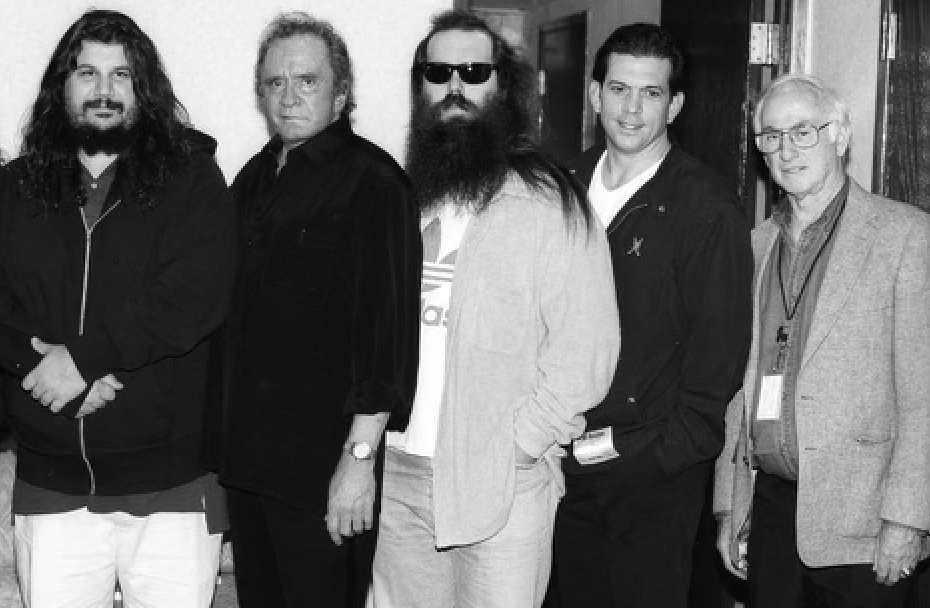
Rick Rubin
MCurley94, CC BY-SA 4.0 https://creativecommons.org/licenses/by-sa/4.0, via Wikimedia Commons
A few practical examples: A writer using AI isn’t outsourcing their thinking. They’re accelerating the dialogue between concept and expression. They can rapidly test different phrasings, explore alternative structures, and spend more time on the high-level creative decisions that actually matter. The artist using AI image generation isn’t abandoning skill—they’re developing new skills: prompt engineering, curation, composition across generated elements, refinement, and artistic direction.
When architects started using CAD software instead of drafting by hand, did architecture become less creative? No. Architects stopped spending weeks on technical drawings and started spending that time on design exploration, testing dozens of spatial concepts they never could have visualized under the old paradigm. The tool didn’t replace architectural thinking—it freed architects to think more architecturally.
AI is exceptionally good at execution and iteration. It’s remarkably poor at intentionality, at taste, at the judgment that says “this is right” or “this needs to be different” or “this deserves to exist.” Those remain human domains, and they’re actually more valuable when execution becomes easier.
The Real Threat Isn’t AI—It’s Inaction
So, are you a resistor, or a waiter? I’m not sure. I think only you can know that. But I can express what I feel is a valid warning, something that genuinely concerns me for resistors: not that AI will replace them, but that they’ll replace themselves through inaction.
Someone who spends the next five years refusing to engage with AI tools while others spend those years learning to combine traditional skills with AI capabilities will find themselves at a serious disadvantage—not because they lack talent, but because they’ve insisted on fighting with one hand tied behind their back.
You mentioned hating AI art contests. I understand the instinct. But consider this: in 1913, the Armory Show in New York introduced American audiences to modern art—Cubism, Fauvism, Expressionism. Traditional painters were outraged. According to legend, they saw it as a contest they couldn’t win because the rules had changed. But the rules hadn’t changed unfairly—art itself was expanding to include new ways of seeing.
AI art contests aren’t replacing human creativity contests. They’re additive. There are still more traditional art competitions now than ever before in history. But there are also new categories exploring what’s possible at the intersection of human creativity and machine capability.
The Lag Between Tool and Mastery
You know that humans are tool builders, and there’s always a lag between building the tool and mastering its use. This is actually cause for optimism.
Right now, the buzz around AI will fool many into thinking it’s a fully developed tool. However, the truth is, AI tools are relatively primitive. GPT-5, Gemini 3, Grok 4—these are like the first automobiles: clunky, limited, requiring constant guidance. But early automobiles didn’t just replace horses. They spawned mechanics, traffic engineers, road designers, automotive designers, and entirely new industries we couldn’t have imagined from the horse-and-buggy era.
The people who started learning to work with early automobiles—understanding their capabilities and limitations, exploring what they made possible—those people shaped the automotive age. The people who insisted horses were superior and refused to engage? They were left behind, still arguing about the virtues of oats while others were building highways.
We’re at the “early automobile” stage with AI. It will get better—vastly better—but the people who start learning now to work with these tools will be the ones who define how creative fields evolve. They’ll be the ones who discover what’s possible at the frontier where human intuition meets machine capability.
What This Means for Creatives Specifically
You enjoy writing and artistic endeavors. Here’s what I want you to reflect on: AI doesn’t threaten your creativity—it threatens your routine.
If your creative process involves a lot of technical execution—the tedious parts, the repetitive refinements, the time-consuming but low-creativity tasks—then yes, AI will disrupt that workflow. But is that actually what you love about creating? Or do you love the spark: the moment of conception, the artistic vision, the emotional truth you’re trying to express?
Think about what happened when digital photography made developing film obsolete. Did photography as an art form die? Quite the opposite. Freed from the technical constraints and costs of film, photographers could experiment endlessly, take thousands of shots exploring an idea, and focus more energy on composition, timing, and vision. The great photographers of the digital age aren’t less skilled than the greats of the film era—they’re differently skilled, and there are more of them because the barriers to entry dropped.
A Challenge, Given in Friendship
I’m not asking you to love AI. I’m asking you to be curious about it.
Spend one month—just one—experimenting with these tools. Use AI to brainstorm ideas for your writing. Use it to visualize concepts for your art. Don’t use them to replace your work. Use them to expand your creative exploration.
I think you’ll discover something surprising: the tools won’t make you feel less creative. They’ll make you feel frustrated that the tools can’t quite capture what you envision. You’ll find yourself becoming more specific about your artistic intent, more particular about your aesthetic choices, because you’ll be able to rapidly test whether your ideas actually work.
The human part—the part that makes you irreplaceable—will become more obvious, not less.
Here’s the hard truth: if you wait five years to engage with AI because you’re hoping it’s a fad or hoping things will settle down, you won’t be jumping into a stable, easier environment. You’ll be jumping into a world where others have five years of experience combining traditional skills with AI capabilities. They’ll have developed intuitions about prompting, workflows that blend human and machine creativity, and portfolios that showcase what’s possible at that intersection.
The exponential nature of AI development means that “catching up” isn’t like learning to use a new software program. It’s like trying to learn a new language after everyone else has been speaking it fluently for years. Possible, but difficult.
And more than that: you’ll have spent five years practicing resistance instead of practicing curiosity. That’s not just a skills gap—it’s a mindset gap.
An Invitation, Not a Demand
I want to be clear: I’m not telling you that you must embrace AI or that you’re foolish for having concerns. Your love for craft and skill is admirable. Your worry about losing something precious is understandable.
But the greatest artists, writers, and creators throughout history have been those who explored the new tools of their era while respecting the techniques of the past. They didn’t abandon what they’d learned—they built upon it with new capabilities.
Picasso mastered classical painting before he deconstructed form with Cubism. Miles Davis mastered bebop before he pioneered modal jazz and fusion. Bob Dylan mastered folk traditions before he went electric and transformed popular music.
AI is here. It’s not going away. The question isn’t whether it will change creative fields—it already has. The question is whether you’ll be someone who helps shape what that change looks like, or someone who watches from the sidelines until it’s too late to have influence.
I think you have too much talent, too much creativity, and too much to offer to let fear keep you in the camps of resistors and waiters. The world needs artists who bring human sensibility to new tools—who can show us what these tools should be used for, rather than letting engineers and corporations define that entirely.
In the 1960s, computer scientists and artists at places like Bell Labs began exploring what computers could do for art. Most traditional artists dismissed it as gimmicky nonsense. But a few pioneers—Vera Molnár, Frieder Nake, and Manfred Mohr—saw potential. They learned to code, not because they abandoned art, but because they saw computation as a new medium.
Today, computational art and generative art are recognized art forms. Museums collect algorithmic pieces. The artists who engaged early didn’t lose their creativity to the machine—they expanded the definition of what creativity could be.
We’re at a similar turning point. The artists, writers, and creators who engage with AI now—critically, thoughtfully, but genuinely—will be the ones who define how these tools evolve and what role they play in human creativity.
I hope you’ll be one of them.
With respect and hope for our shared creative future,
Your friend,
Aaron
P.S. — If you take nothing else from this letter, take this: every tool that expanded human capability was once feared as a replacement for human capability. The wheel didn’t make humans lazy—it let us travel farther. Writing didn’t weaken memory—it let us preserve and share more. Calculators didn’t make us bad at math—they freed us to tackle more complex problems. AI won’t replace human creativity. It will reveal that there was always more creativity in us than we had time or means to express. Don’t let fear keep you from discovering what you’re truly capable of.
P.P.S. — I haven’t done any genuine writing in about a year. Thank you for providing the fuel and inspiration for this letter. I feel it’s some of my best writing ever. That should tell you something about what happens when we have something we truly care about to say—the tools matter less than the conviction behind the words. I hope you’ll find the same thing when you give these new tools a genuine chance.